The short version
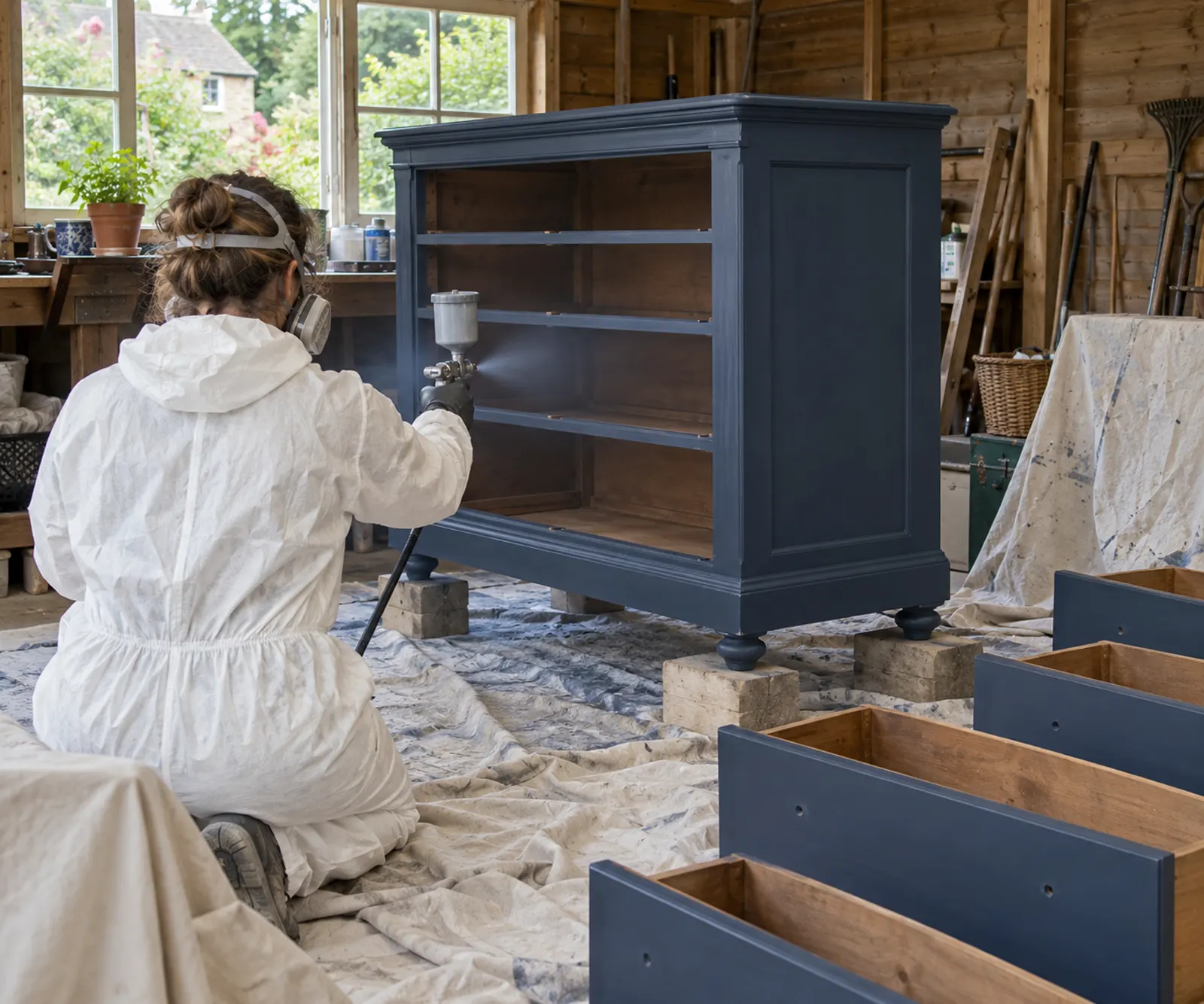
Remove drawers, doors and hardware, clean with a degreaser, key or strip depending on the old finish, seal any wood that can bleed, then spray two or three thin coats from an HVLP gun. Spray drawers standing on their backs, legs upside down, and tops last. Expect £150 to £600 for a single piece sprayed professionally in 2026, or £40 to £120 in materials if you own a sprayer.
Eggshell or satin suits most bedroom and living room furniture; tabletops need a harder lacquer on top.
What sprays well, and what does not
Solid timber, MDF, veneered chipboard and previously painted furniture all spray well with the right primer. Flat-pack furniture made from melamine-faced chipboard sprays well on the faces but needs care at cut edges, where the chipboard core will soak up paint and swell if water-based primer goes on thick.
Pieces that are harder work:
- Mid-century teak or rosewood veneer. These are often worth more unpainted. Check before you paint. Oily timbers like teak also need a degrease with a solvent wipe and a shellac primer.
- Cane, rattan and wicker. Spraying is the only practical way to paint them, but expect to use far more paint than the area suggests.
- Upholstered pieces. Masking fabric well enough is hard. Remove seats where possible.
- Antique furniture with old varnish or french polish. Original finishes may contain lead-based pigments in old painted pieces. See the HSE lead guidance before sanding.
Old finishes: strip, key or seal
| Existing finish | Test | Prep | Primer |
|---|---|---|---|
| Varnish or polyurethane, sound | No flaking, tape test passes | Degrease, key with 180 grit | Bonding or stain-blocking primer |
| Varnish, cracked or flaking | Flakes under a scraper | Strip with chemical stripper or sand back | Stain-blocking primer on bare wood |
| French polish or shellac | Softens with a meths-soaked cloth | Clean with meths and wire wool or key lightly | Shellac primer bonds well |
| Old paint | Cross-hatch tape test | Key if sound; strip if it lifts | Usually a waterborne primer is enough |
| Wax | Fingernail leaves a mark; smears | Remove wax completely with a wax remover or white spirit and fine wire wool | Shellac primer as a barrier |
| Melamine or laminate | Hard plastic surface | Degrease, key with 240 | Bonding primer |
Wax is the trap. Paint will not stick to it, and traces left in corners and carvings cause fish-eyes, small craters in the wet paint. Can't tell if an old piece was ever waxed? Treat it as waxed.
Old mahogany-stained or red-toned furniture often bleeds pink through white paint. A shellac-based primer stops it. Test on the back of the piece first; if pink shows after the first coat of waterborne primer, switch to shellac.
The method, piece by piece
Strip down the piece
Remove drawers, doors, handles, hinges, castors and any glass. Photograph how hardware goes back on. Repair loose joints with wood glue and clamps now; spraying does not hide wobbly furniture.
Clean, then prep
Wash with a degreaser, rinse, dry, then strip, key or seal according to the table above. Fill dents with two-part filler and sand flush.
Mask the insides
Most people only paint the visible faces and the first 20 mm inside the carcass. Mask the inside of the carcass with tape and paper so drawer runners stay clean. Painted drawer sides stick: leave them bare, or wax them after the paint has cured.
Raise it off the floor
Stand the carcass on blocks or painter's pyramids so you can spray the bottom edges. Lay drawers face up on their backs. Turn chairs and tables upside down for the first coat on the legs, then the right way up for the second.
Prime and denib
Spray one coat of primer, let it dry, then sand with 240 to 320 grit and remove all dust. Look at the piece under a low raking light for any filler or dents that still show.
Spray in a fixed order
Inside edges and recesses first, then legs and frames, then sides, then the top last. On a chest of drawers, spray the carcass and the drawer fronts in the same session for an even colour. Two or three thin coats, with the full recoat time between them.
Protect the top
Tabletops, desks and dressing tables take far more abuse than the sides. Finish them with a hard waterborne lacquer or a paint sold as suitable for floors or worktops. Keep it a satin or matt clear coat if you want the colour to stay low-sheen.
Rebuild after a day, use after a fortnight
Refit hardware after 24 to 48 hours. Avoid putting anything heavy or hot on painted tops until the paint has cured, typically about two weeks for waterborne paints.
Worth copying for furniture: the progression through sanding grits, rounding sharp edges very slightly, and sealing panel joints with a thin bead of caulk on framed doors such as wardrobes and sideboards.
UK notes: the vinyl sealer and pre-catalysed lacquer shown are solvent trade products. For home spraying in the UK, a waterborne primer and topcoat, or a waterborne clear lacquer on tops, is the safer route.
Video by The Handyman. Open it on YouTube. Nothing loads from YouTube until you press play; the player then comes from youtube-nocookie.com.
Finishes for different furniture
| Piece | Wear | Suggested finish |
|---|---|---|
| Wardrobe and bedroom drawers | Low to medium | Waterborne furniture or trim paint, eggshell or satin |
| Sideboard or TV unit | Medium; tops get marked | Satin paint, clear waterborne lacquer on the top |
| Dining table and chairs | High; heat, spills, knocks | Paint plus two coats of hard waterborne lacquer, or leave the top as timber and paint the base |
| Children's furniture and cots | High; may be chewed | Paint that states it meets the toy safety standard EN 71-3 |
| Garden furniture | Weather and UV | Exterior wood paint or stain sold for garden furniture; not interior paint |
Typical costs
Professional furniture spraying is priced per piece and varies with size, prep and finish. These ranges are drawn from published 2026 UK sprayer price lists.
| Item | Typical range |
|---|---|
| Bedside table | £80 to £150 |
| Chest of drawers | £120 to £300 |
| Sideboard | £180 to £450 |
| Freestanding wardrobe | £250 to £600 |
| Fitted wardrobes, one bedroom | £500 to £2,000+ |
DIY materials for a chest of drawers are typically £40 to £120: a 750 ml tin of primer, a 750 ml to 2.5 L tin of paint, abrasives and masking. Add the cost of a sprayer if you do not own one; an entry-level 230 V HVLP is usually £70 to £150. The paint calculator works for furniture too: use the custom size fields for drawer fronts and panels.
Related: sprayer setup and technique, primer types by surface, and the drying planner.