The short version
Expect about £800 to £1,600 for a professional respray of a typical 15 to 20 front kitchen in 2026, from about £600 for a small galley and £2,500 or more for big kitchens, peeling vinyl wrap or carcasses sprayed on site. New fitted doors run about £1,300 to £2,800, and a new kitchen £7,000 upwards before appliances. Price your own in the respray or replace calculator.
Typical kitchen respray prices in 2026
There is no national price list for kitchen spraying. These ranges combine published UK cost guides updated in 2026 (Checkatrade's October 2026 figures put a typical respray at £800 to £1,600) with sprayers' own published price lists, checked in October and November 2026. Some include VAT and some do not, and London and the South East usually run 20 to 30% higher.
| Kitchen | Fronts (doors and drawers) | Typical range |
|---|---|---|
| Small or galley | 8 to 12 | £600 to £1,200 |
| Medium | 13 to 20 | £900 to £2,000 |
| Large, with island | 21 or more | £1,500 to £3,500 |
| Add fixed carcasses sprayed on site | Face frames, end panels, plinths | About £400 to £800 extra |
| Add a matching utility room | Usually 6 to 10 fronts | About £250 to £500 extra |
Small jobs carry a minimum charge, commonly £600 to £1,000, because masking, travel and setting up cost the same for eight doors as for twelve. Per-door prices then fall as the job grows.
Per door and per item
Some sprayers quote a whole-kitchen price; others price each item. These are typical 2026 per-item figures from published price lists and cost guides, before any minimum charge.
| Item | Typical price | Note |
|---|---|---|
| Standard door | £45 to £85 | Lower end on whole-kitchen jobs; £80+ when priced singly |
| Drawer front | £30 to £60 | Shallow fronts are cheaper than doors |
| Larder or tall door | £75 to £120 | |
| Integrated appliance front | £45 to £85 | Priced like a door |
| End or island panel | £60 to £100 | |
| Plinth or cornice | £7 to £15 per metre | |
| Stripping peeling vinyl | £8 to £20 per door extra | Sometimes more for badly lifted wrap |
| Bespoke colour match | £50 to £120 once | Standard colours are often free |
| Two-tone kitchen | £75 to £150 extra | For example, a different island colour |
| Fitting new handles | £3 to £5 per handle plus the handles | Includes filling old holes if agreed |
Respray vs full replacement
A respray keeps everything you already paid for (carcasses, worktops, appliances, plumbing and the layout) and changes the one thing most people want to change: the colour. A new kitchen replaces all of it. That is why the price gap is so large.
| Route | Typical cost | Time | Disruption | Best for |
|---|---|---|---|---|
| DIY brush and roller | £180 to £400 | 5 to 10 days | Doors off for a week | Tight budgets, patient painters |
| DIY spray | £310 to £760 with a sprayer | 2 to 3 weekends | Booth in a garage or spare room | Slab doors, owners with space |
| Professional respray | £900 to £1,700 | 3 to 5 working days | Kitchen usable, doors away | Sound kitchens that need a new colour |
| New doors and drawer fronts, fitted | £1,250 to £2,800 | 1 to 2 days after a lead time | Low | Damaged doors on good boxes, or a style change |
| Full new kitchen, fitted | £7,000 to £17,000+ | 1 to 3 weeks on site | No kitchen for weeks | Failing boxes, new layout |
Figures come from the same model as the calculator, for MDF doors in sound condition outside London. New-kitchen figures exclude appliances, building work and electrics, which can double the total.
When a cabinet respray is the right call
A respray is the best value when the doors and carcasses are in good condition and only the colour or finish has dated: a sound 2000s oak shaker, a solid painted kitchen in a colour you have tired of, or a gloss kitchen you want in matt. Check that doors close square, hinges hold, drawer runners glide and there is no swelling around the sink and dishwasher. If all of that passes, spraying the doors you have is usually the smartest spend.
When to replace instead
- Swollen or blown MDF around the sink and dishwasher. Spray cannot hide it, and the doors keep swelling if water gets in.
- Water-damaged carcasses, sagging shelves or broken hinge mountings. New paint on failing boxes is poor value.
- You want a different door style. A respray keeps the profile; turning slab doors into shaker needs new doors.
- Heavily moulded 1990s doors, such as cathedral arches. They respray well, but still look like the original style in a new colour.
What a respray includes, and what a full makeover adds
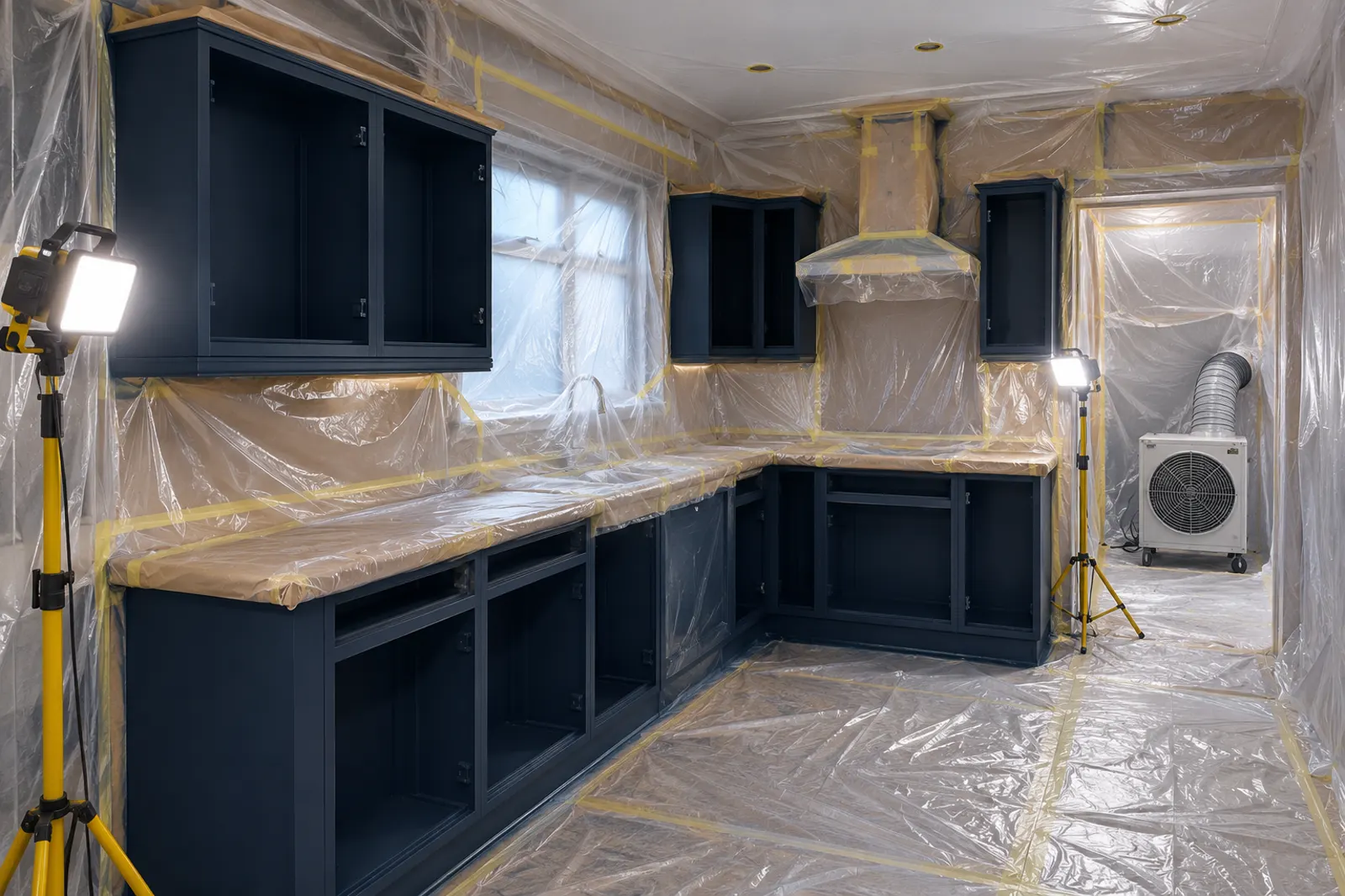
A thorough respray of doors and drawer fronts normally covers:
- Removing doors, drawer fronts and handles, and labelling them.
- Degreasing with a solvent or alkaline panel wipe, then sanding every surface.
- Filling chips and repairing small edge damage.
- An adhesion or bonding primer for the surface, often two coats with sanding between.
- Two topcoats, commonly two-pack (2K) polyurethane or a catalysed waterborne coating, sprayed in a booth.
- Refitting, adjusting hinges and fitting handles.
A kitchen makeover package usually adds some of: spraying the fixed carcasses, end panels and plinths on site; new handles and soft-close hinges; a new laminate or wood worktop; a new splashback; and sometimes new lighting. Each is priced separately, so ask for a line-by-line quote.
Two-pack coatings cure by chemical reaction, which makes them harder and more resistant to grease and cleaning products than the one-pack paint sold in DIY shops. That hardness is a large part of what you pay for. Because 2K products contain isocyanates, they can only be sprayed safely with air-fed breathing equipment and extraction; HSE guidance on isocyanate spraying explains why they are not a DIY product.
Colours and finishes
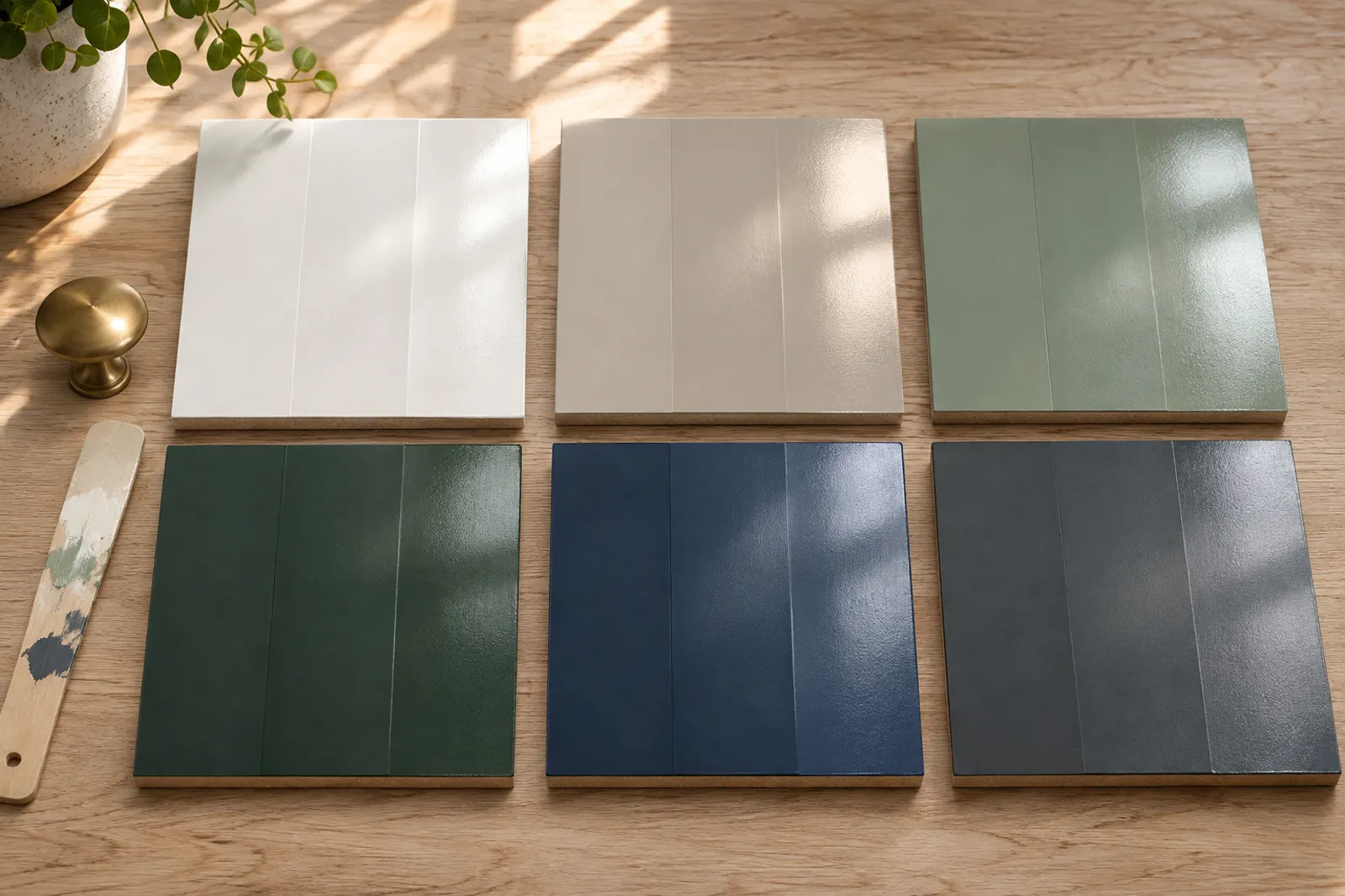
Most sprayers mix to any colour from the main UK paint charts or the RAL and British Standard ranges, and many will match a paint sample. Standard whites, off-whites, sage greens and anthracite greys are often quickest; a bespoke match is a one-off extra.
Finishes are described by sheen. Matt (roughly 5 to 10% gloss) is the popular modern choice and hides small dents. Satin (around 20 to 40%) is the most practical to wipe. High gloss (70% and up) suits handleless slab doors but shows every ripple, so it needs perfect prep and costs more. Ask for a sample door or board in the exact sheen; the same colour looks noticeably darker in matt than in satin.
- Matthides dents, can polish up
- Eggshellsoft, wipeable
- Satinthe usual kitchen choice
- Glosstoughest, shows every flaw
On trends: writers this year are moving from cool greys and stark white towards warm off-whites, putty and muted greens, while the Houzz UK 2026 kitchen survey found blue and green were the most chosen cabinet colours among renovating homeowners. A respray means you can change your mind later for the same price, so choose what you like in your own light.
How a professional respray works
There are two common setups. In a workshop respray, the sprayer removes doors and drawer fronts, takes them away for two to five days, and returns them finished. You keep using the kitchen, just without doors. In an on-site respray, the room is sealed and doors are sprayed in a temporary booth at your home. Carcasses are always done on site.
If carcasses are sprayed, plan for one or two days without the hob or sink and keep the room ventilated afterwards. Treat the finish gently for the first week: two-pack coatings harden faster than DIY paint but keep curing.
Worth watching to see how much masking and prep a whole-kitchen job needs before any paint goes on. It helps when judging whether a quote has allowed enough time.
UK notes: the paint and 120 V airless sprayer are US products. UK professionals more often use 2K or catalysed waterborne coatings through air-assisted or HVLP equipment in a booth.
Video by Golden Key Design. Open it on YouTube. Nothing loads from YouTube until you press play; the player then comes from youtube-nocookie.com.
How to read a respray quote
Quotes are hard to compare because they include different things. Ask each sprayer to set out in writing:
- Exactly which items are included: doors, drawer fronts, end panels, plinths, cornice, pelmets, face frames, island and utility.
- Whether both sides of doors are sprayed, or fronts and edges only.
- Removal, transport and refitting, and whether hinge adjustment is included.
- The coating system: primer, topcoat type (2K, catalysed or one-pack) and sheen.
- How peeling wrap or failed paint will be dealt with, and the cost.
- The guarantee, with what it covers and excludes.
- Whether the price includes VAT.
A quote well below the ranges above usually means less preparation: a quick wipe instead of a full degrease and sand, one coat instead of two, or a one-pack paint. These can look the same on day one and very different a year later. Searching for kitchen respraying near you will turn up local firms; compare at least three written quotes against the list above, and look at their finished work in person or in recent photos.
What about a kitchen respraying kit?
Kits sold for DIY respraying usually bundle a cleaner, primer, topcoat and sometimes a small sprayer. They can work well if they match your door surface, but the coating is one-pack, so it will not be as hard as a professional 2K finish. Check the kit primer suits laminate or vinyl if that is what you have. The spray painting guide covers the setup, and the paint calculator tells you whether the kit holds enough paint.
Questions
How much does it cost to respray a kitchen in the UK?
Published UK guides updated in 2026 put a typical kitchen respray at about £800 to £1,600, with small galley kitchens from about £600 and large kitchens with an island or on-site carcass spraying at £1,500 to £2,500 or more. Per front, whole-kitchen jobs usually work out at £40 to £100.
Is respraying a kitchen worth it?
Yes, when the carcasses, hinges, drawer runners and layout are sound and you mainly want a new colour. A respray typically costs well under a fifth of a like-for-like new fitted kitchen. If doors are swollen, runners broken or you want a new layout, new doors or a new kitchen are better value.
How long does a kitchen respray last?
A well-prepared respray in a two-pack or catalysed coating typically lasts many years, and written guarantees of five to ten years are common. Preparation decides how long it lasts more than the paint brand.
Can you respray vinyl-wrapped kitchen doors?
Yes, if the wrap is firmly stuck. Peeling or bubbled wrap has to be stripped first, often for an extra charge per door, and the bare MDF sealed and primed before spraying.
How long does a kitchen respray take?
Usually three to five working days. In a workshop respray, doors are collected and returned a few days later while you keep using the kitchen without doors. On-site spraying of carcasses takes one to three days of masking and spraying with the room out of use.
Can you respray kitchen worktops?
Some companies offer worktop spraying with specialist coatings, usually priced separately at a few hundred pounds. It is less durable than the doors because worktops take heat, knives and water. Replacing a laminate worktop is often the longer-lasting choice.
Where the prices come from: published UK cost guides updated in 2026 (Checkatrade's spray painting kitchen cabinets guide, last updated October 2026; Homebuilding; MyJobQuote), plus several UK sprayers' published per-item price lists, checked October and November 2026. No sprayer is recommended. Always get at least three written quotes.