The short version
A uPVC sprayer cleans and degreases the frames, abrades them, masks glass and brickwork, applies an adhesion primer where the system needs one, then sprays a flexible coating made for plastics. Expect roughly £120 to £200 per window and £200 to £350 per door and frame in 2026. It is worth it when the frames and sealed units are sound and you just want a new colour.
Most uPVC coatings are low sheen, similar to a smooth eggshell, so they look closer to factory foiled frames.
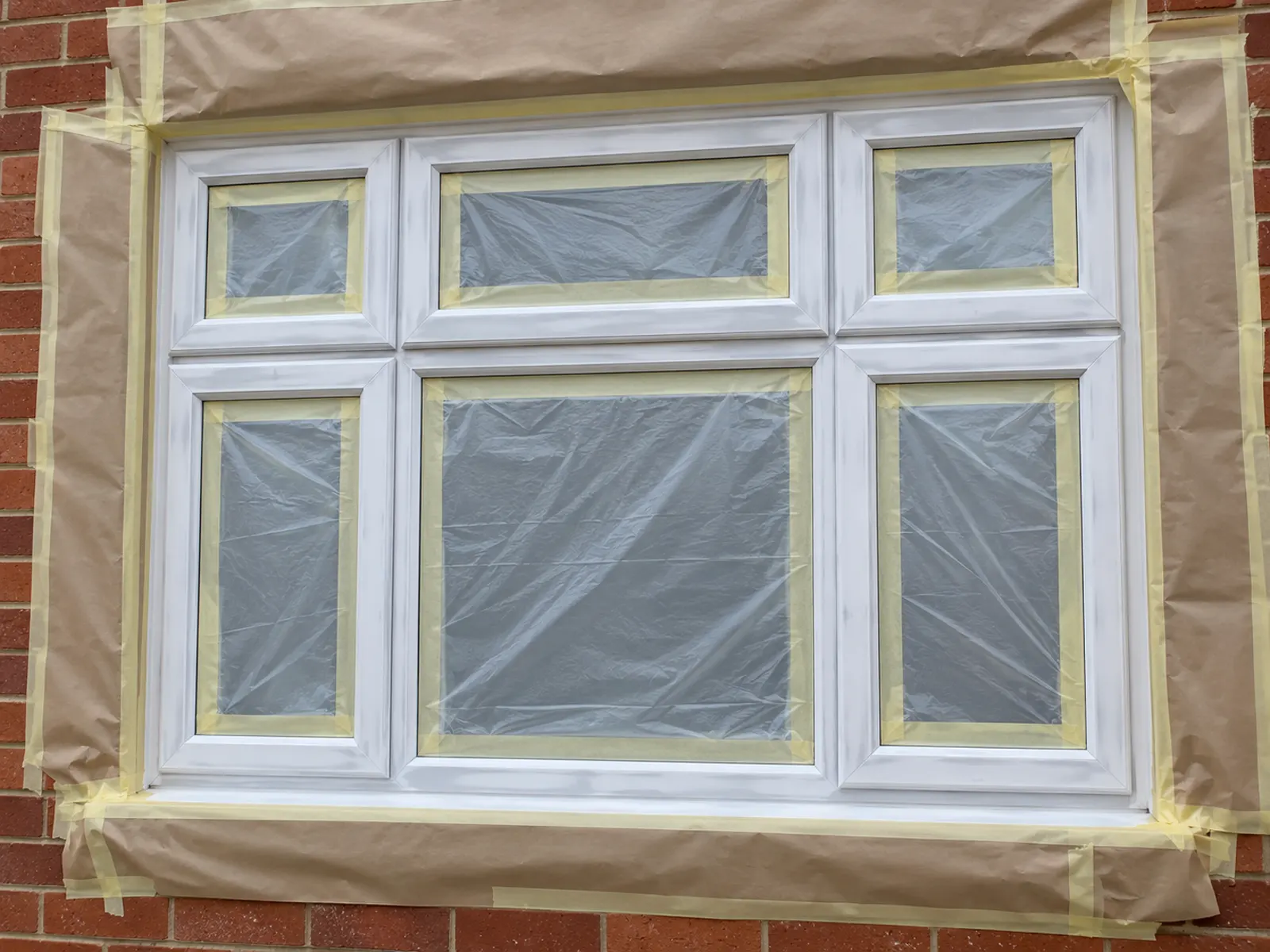
What the process involves
Survey
The sprayer checks for cracked frames, blown sealed units (misting between panes), failed seals and loose hardware. Spraying hides none of those.
Clean and degrease
Frames are washed and then wiped with a plastic-specific cleaner to remove dirt, silicone residue and the waxy release agents left from manufacture.
Abrade
The surface is keyed with a fine abrasive pad so the coating has something to grip. Skipping this step is the most common shortcut on cheap jobs.
Mask
Glass, gaskets, handles, brickwork, sills and the ground are covered with film, paper and tape. Opening sashes are often masked separately so their edges can be coated.
Prime where needed and spray
Some systems use an adhesion primer; others are direct-to-uPVC coatings. Two coats are typical. Frames are usually touch dry within an hour.
Unmask and cure
Masking is removed while the edges are still clean. Windows can usually be opened gently the next day and the coating keeps hardening over about a week.
The coatings used
uPVC flexes with temperature, so the coating has to stay flexible as well as bond to plastic. Professional sprayers mainly use one of two types:
| Type | Pros | Cons |
|---|---|---|
| Waterborne uPVC coating (1K) | Low odour, safer to spray on site, good flexibility | Slower to harden, more sensitive to cold and damp weather |
| Two-pack (2K) polyurethane | Very hard, good UV and chemical resistance | Contains isocyanates; sprayers need air-fed breathing equipment; neighbours and pets kept away |
Dark colours absorb more heat. On white uPVC frames in full sun, a very dark coating can make the frame expand more than it was designed for. Some window manufacturers warn against dark coatings for this reason, and painting may affect the frame manufacturer's guarantee. Check before you go darker than mid-grey.
Typical 2026 costs
| Item | Typical range |
|---|---|
| Casement window | £120 to £200 |
| Bay window | £250 to £450 |
| Front or back door and frame | £200 to £350 |
| Garage door | £200 to £500 |
| Terraced house, windows and door | £800 to £1,500 |
| Semi-detached house | £1,000 to £1,800 |
| Detached house | £1,200 to £2,000+ |
| Conservatory frames | £500 to £2,200 |
Based on published 2026 UK cost guides (Checkatrade, MyJobQuote) and sprayers' own price lists. Scaffolding or access towers for upper floors, RAL colour matching, and fascias or soffits are usually extra. Replacing a uPVC window typically costs several times more per window, so spraying is good value only when the frame and glass are worth keeping.
Why sprayed uPVC fails
- No abrading. Smooth uPVC gives little to grip. Coatings sprayed over unkeyed plastic peel in sheets, often within 18 months.
- Release agents and silicone left on. These cause fish-eyes and poor adhesion. They need a proper plastic cleaner, not just soapy water.
- Wrong coating. Rigid paints crack as the frame flexes. Aerosol paints rarely bond well to uPVC.
- Cold or damp weather. Most coatings need a minimum temperature and dry surfaces. Spraying late in the day in autumn can trap dew under the film.
- Gaskets painted. Rubber seals coated with paint go hard, crack and let in draughts. They should be masked.
Planning and consent
In England, painting the exterior of a building is generally permitted development under Class C of Part 2 of the General Permitted Development Order 2015, so planning permission is not normally needed. There are exceptions:
- Listed buildings: changing the colour of windows and doors can affect the building's character and may need listed building consent.
- Article 4 directions: some conservation areas remove permitted development rights for changes to windows and doors, including their colour.
- Flats and leasehold: your lease may forbid changes to window colour, or require freeholder consent.
- Planning conditions: some newer estates have conditions on external finishes.
Check with your local planning authority and use the Planning Portal's guidance on doors and windows if you are unsure.
Can you do it yourself?
You can paint uPVC with a paint sold specifically for it, using a brush or a small HVLP sprayer, if you follow the same prep: clean, degrease with a plastic cleaner, abrade, mask the gaskets. Expect a good result on a door or a few windows on the ground floor. It rarely matches a professional finish on a whole house, and working at height on ladders with a sprayer is a real risk. A professional coating on upper windows needs proper access equipment.
If you are spraying any two-pack product, the same HSE guidance on isocyanates applies as for kitchen resprays. It is not a DIY material.
Questions
How much does uPVC spraying cost in the UK?
Published 2026 UK cost guides put uPVC spraying at about £120 to £200 per window and £200 to £350 for a door and frame. A whole house is commonly £900 to £2,000, more if fascias, soffits or a conservatory are included.
How long does sprayed uPVC last?
A professionally prepared and sprayed uPVC coating typically lasts 8 to 15 years. Many sprayers offer guarantees of 5 to 10 years. Poor preparation is the main cause of early peeling.
Do I need planning permission to spray uPVC windows?
Painting the outside of a house is usually permitted development in England. You may need consent if the house is listed, if an Article 4 direction covers changes to windows or their colour, or if a planning condition restricts it. Check with your local planning authority first.
Can I spray uPVC myself?
You can paint uPVC with a paint made for it, but professional results usually rely on specialist coatings and spray equipment. Aerosol cans rarely bond well and tend to peel.
Masking, in detail: the same channel tapes a window ready for spraying. Masking is about half the job, and this is what a careful sprayer does before any coating goes on.
Video by Abode Academy. Open it on YouTube. Nothing loads from YouTube until you press play; the player then comes from youtube-nocookie.com.
Related: kitchen respraying costs work on a similar basis, and the spraying safety notes apply to any coating you spray yourself.